So, first my bank tells me there’s a tax levy on my bank account – which I believed, since the Alabama tax dept. has been after me in any case. Then it turns out to be some alleged credit card debt from years ago. Now tonight, on returning home, just as I was beginning to see the light at the end of the tunnel of my current financial crisis, I find a notice from the good old Alabama Department of Revenue demanding that I pay $9,097.15 within the next ten days or else they threaten to issue a writ to seize “your bank accounts and/or up to 25% of your wages, or issue an execution on real/personal property,” etc. I guess this just isn’t my week.
Archive | 2009
Rothbard on Aptheker on Slavery
At the Mises Institute today I was looking through the library and noticed Murray Rothbard’s copy of American Negro Slave Revolts, the 1943 study by Marxist historian Herbert Aptheker. One passage stood out because Rothbard had marked it with heavy lightning-bolt squiggles and marginal comments like “Right,” “Good,” “Great.”
Aptheker, discussing the claim that “cruelty was characteristic of the institution of American Negro slavery,” writes:
Many, perhaps most, writers on this subject have denied this and assert, on the contrary, that “kindliness [was] the rule” under the system. … A recent repetition of this idea urges the reader to bear in mind that “owners of slaves were hardly likely to be cruel or careless with expensive pieces of their own property,” just as most people do not abuse their horses or automobiles.
Aptheker goes on to provide ample empirical evidence to the contrary; but first he attacks the theoretical argument, and this is the section that excited Rothbard’s enthusiastic approval:
[T]he fatal error in the above proposition is the assumption that one may accurately compare any two pieces of property, even if they be so far apart and so distinct as is a horse from a human being.
There are, however, fundamental differences. Basic is the reasoning faculty which leads men, unlike automobiles, to compare, plan, hope, yearn, desire, hate, fear, which leads them to seek pleasure and shun pain, to spin dreams and build philosophies and struggle and gladly die for them. Human beings, in fine, or, at least, many human beings, do possess the glorious urge to improve themselves and their environment. And people who are beaten, branded, sold, degraded, denied a thousand and one privileges they see enjoyed by others will be discontented, and will plan, or at least, think of bettering their lot.
This was the slaveholders’ nightmare. This it was that led them to erect theologic, economic, social and ethnologic justifications for their system, that led them to build a most elaborate machine of physical repression and terrorization. For, and here was another crucial difference, most slaves were owned as investments, not as ornaments or commodities of consumption, as are most automobiles. Slaves were instruments of production, were means by which men who owned land were able to produce tobacco and rice and sugar and cotton to be sold and to return them a profit. Their existence had no meaning other than this for the employers. Profit must be gotten from these workers – whom the bosses owned – no matter what blood and sweat and tears this entailed, and the more profit the better.
When one combines the differences, then, he finds the slaves to have been not inanimate ornaments or instruments of pleasure, but thinking, living commercial investments, rational machines of production. It may be said, therefore, that cruelty was an innate, inextricable part of American Negro slavery, for these peculiar machines, possessed of the unique quality of human beings – reason – had to be maltreated, had to be made to suffer physical cruelty, had to be chained and lashed and beaten into producing for a profit. The latter was the reason for their existence and incorrigibility, protest, disobedience, discontent, rebelliousness were bad in themselves, and disastrous as examples. Instead of the slave’s value preventing cruelty, it was exactly because of that value, and that greater value he could produce – when forced – that cruelty existed. (pp. 132-133)
It occurs to me this Aptheker-Rothbard argument also raises a problem for Hans Hoppe’s contention that monarchs can be expected to be relatively benign because they take the attitude of private ownership toward the realms they rule.
Best Defense
It’s interesting how so many defenders of the Cambridge Police Department are arguing that there’s nothing wrong with the officer’s conduct because he would have arrested Gates even if he hadn’t been black.
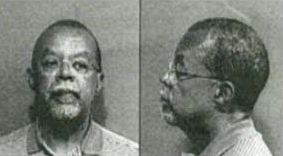 I think we’re entitled to doubt whether he really would have been as ready to arrest a non-black Gates – but OK, let’s stipulate that that’s so. What the hell kind of defense is that? “He’s not a racist, because he treats whites like crap too!”
Whatever his motivations, Officer Crowley (any relation to Aleister, incidentally?) should have dropped the case and departed as soon as he determined that the “intruder” was in his own home. (Note that Crowley himself has said, “I really didn’t want to have to take such a drastic action because I knew it was going to bring a certain amount of attention, unwanted attention, on me,” which shows that he knew the man he was arresting was not a burglar.)
Assume that Gates behaved in a “confrontational” manner; assume, if you like, that he did so in a way that went beyond what the situation warranted (though this seems far from obvious even according to the officer’s version of the story). So what? There’s no evidence that Gates aggressed against Crowley; his only “crime” was failing to kowtow to the superior authorita conveyed by Crowley’s blue costume. (And if Gates weren’t a famous person, I doubt the charges would have been dropped.) But while the American public is willing – though, alas, just barely – to be dragged into a conversation about the possibility that cops might be systematically abusive toward particular races, the idea that they might be systematically abusive, period, is still outside the bounds of polite discourse.
Quick Addendum:
Another argument I’ve heard is that Crowley’s conduct couldn’t have been racially motivated because he leads anti-racial-profiling seminars and once gave mouth-to-mouth resuscitation to a black athlete. This “but some of my best friends are …” argument misses the point. People with consciously antiracist convictions can still be guilty of relying on racist assumptions in their conduct; that’s how prejudice works. (And of course the same applies to sexism, statism, homophobia, and so on.)
Addendum #2:
See also Charles’ post.
Side Order
 Today’s paper contains a great quote attributed to Jascha Heifetz:
No matter what side of an argument you’re on, you always find some people on your side that you wish were on the other side.
But according to Heifetz’s official website, the actual quote is:
No matter what side of an argument you’re on, you always find some people on your side that wish you were on the other side.
Equally true, but a somewhat different flavour.
Hexagonistes
The poster for the upcoming Jonah Hex movie is out:

This could be good, or it could be soul-destroyingly awful. The casting of Megan Fox does not make me optimistic. But I await events.
Atlas Shrugged Movie Update #96895
 Instead of a movie version with Angelina Jolie, Atlas Shrugged might be getting a miniseries with Charlize Theron. (CHT Angela Pham by way of James Tuttle.)
On the whole I think this is good news. Theron isn’t quite my vision of Dagny, but neither was Jolie; and although I’d love to see Rand’s surreal vision unfolding on the big screen, unless it’s filmed as a trilogy LOTR-style, it’s probably better to do it in a format that allows more of the story and characters to be presented. (The report says that Theron is “eager to play the role” and favours a miniseries out of concern that “a feature would lose many of the nuances of the monster-sized novel.”) Plus, if it succeeds as a miniseries we might always see a big-screen version further down the road.