[cross-posted at Liberty & Power]
The main plotline of the Star Wars prequel trilogy concerns an apparent conflict between the central government (the Senate) on the one hand and a coalition of mercantile interests (the Trade Federation, the Commerce Guild, etc.) on the other. As events unfold, however, it quickly becomes obvious to the audience (though much less quickly to the protagonists) that the conflict is largely a ruse, with the leadership of the two sides (Chancellor Palpatine and Count Dooku, respectively) secretly working hand in glove.
 Which isn’t to say that all is rosy between them. Each wants to be the dominant partner; witness Dooku’s failed attempt to betray Palpatine in Episode II, and Palpatine’s successful backstabbing of Dooku and his corporate allies in Episode III. Still, the partnership is stable enough to succeed in manipulating the protagonists into unwittingly undermining the very liberty they have been seeking to protect. As the pseudo-conflict escalates, there are, in the words of Episode III’s opening crawl, “heroes on both sides” – but the good guys on the two sides have been duped into fighting one another, each side grasping the evil of the other side’s leadership but not yet that of its own.
Unfortunately, this is not just science fiction.
During the first half of the 20th century, there was a widespread perception that big government and big business were fundamentally at odds. Free-market individualists generally regarded themselves as defenders of peaceful business interests against the rapacious state. Those on the left saw the same opposition though with the reverse evaluation; for them government, especially (in the U.S.) the federal government, was the champion of the common people against rapacious business interests. To be sure, the libertarians would periodically complain about businesses seeking subsidies and protectionism, and the left would periodically complain about governmental violations of civil liberties – but by and large each side saw these problems as embarrassing deviations from the mostly noble record of their favoured allies.
It hadn’t always been so. In the late 19th and very early 20th century, there was a much more widespread understanding among both leftists and free-marketers of the symbiotic relationship between state and corporate power. Just imagine telling William Graham Sumner, or Benjamin Tucker, or Emma Goldman, that the relationship between government and business is one of enmity!
 But this insight seems to have gotten submerged in the triumphant advance of progressivism and social democracy. By the 1920s Sumner was dead, Tucker in voluntary exile, and Goldman deported; and former anarchists like Victor Yarros had forgotten everything they’d once known about class analysis. By the 1930s, it was possible for someone like FDR to cartelise the entire economy under a plutocratic elite and yet have his policies viewed (with admiration in some quarters, alarm in others) as an assault on the business class on behalf of workers and the downtrodden.
But in the 1960s things began to change, with the discovery, or rediscovery, of what came to be known as corporate liberalism. It’s no coincidence that this era saw the emergence of both the new left and modern libertarianism – and both movements differed from their predecessors precisely over this question. The research of new left historians like Gabriel Kolko, James Weinstein, and William Appleman Williams, and journals like Studies on the Left, revealed that the corporate elite had been both the chief beneficiaries of and the chief lobbyists for the supposedly anti-business regulations of the Progressive Era; and Murray Rothbard and his associates at the journal Left and Right and its successor Libertarian Forum eagerly brought the same message to the libertarian “right.” Free-marketers were discovering that their beloved business class, far from being Ayn Rand“s “persecuted minority,” had all along been in league with the hated state; while those on the left were simultaneously learning that their beloved liberal state, far from being the bulwark of the poor against the plutocracy, had all along been in league with the hated corporate elite.
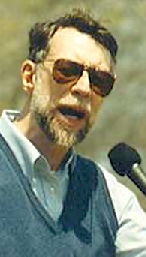 In a famous 1965 speech, SDS president Carl Oglesby spoke for much of the new left in pointing out that the “menacing coalition of industrial and military power” and its “demand for acquiescence” against which he and his fellow radicals were organising were “creatures … of a Government that since 1932 has considered itself to be fundamentally liberal.”
The original commitment in Vietnam was made by President Truman, a mainstream liberal. It was seconded by President Eisenhower, a moderate liberal. It was intensified by the late President Kennedy, a flaming liberal. Think of the men who now engineer that war – those who study the maps, give the commands, push the buttons, and tally the dead: Bundy, McNamara, Rusk, Lodge, Goldberg, the President himself. … They are all liberals.
Oglesby concluded that “corporate liberalism …. performs for the corporate state a function quite like what the Church once performed for the feudal state. It seeks to justify its burdens and protect it from change.”
On the libertarian side, Rothbard was arguing in the same year that the political program of big business had always been to “fasten upon the economy a cement of subsidy, stabilization, and monopoly privilege,” and that the aim and effect of the New Deal in particular had simply been “to impose a State monopoly capitalism through the NRA, to subsidize business, banking, and agriculture through inflation and the partial expropriation of the mass of the people through lower real wage rates, and to the regulation and exploitation of labor by means of government-fixed wages and compulsory arbitration.”
 Corporate liberalism functions via a façade of opposition between a purportedly progressive statocracy and a purportedly pro-market plutocracy. The con operates by co-opting potential opponents of the establishment; those who recognise that something’s amiss with the statocratic wing are lured into supporting the plutocratic wing, and vice versa. Whenever the voters grow weary of the plutocracy, they’re offered the alleged alternative of an FDR or JFK; whenever they grow weary of the statocracy, they’re offered the alleged alternative of a Reagan or Thatcher. Perhaps the balance of power shifts slightly toward one side or the other; but the system remains essentially unchanged. (Which explains, for example, why the recent much-trumpeted power shift in Congress has resulted in precious little policy change.)
Alas, just as the insights of the 19th century were largely lost by the 1920s, so the insights of the 1960s seem to have become largely lost by the 1980s. Probably Reagan indeed played a crucial role in sowing confusion once more, this time by wrapping fascism in libertarian rhetoric just as the Progressives and FDR had wrapped fascism in leftist rhetoric. In any case, many libertarians today (sometimes even professed followers of Rothbard) have gone back to thinking of business as a persecuted minority to be defended against the creeping “socialism” of the regulatory state, while many on the left (sometimes even professed anarchists, like Noam Chomsky) look to the federal government as a bulwark against so-called “laissez-faire” and indulge in nostalgia for the New Deal.
If the left/libertarian coalition of the 19th century, abortively re-attempted in the 1960s, is to be reestablished, as it should be, it is above all an understanding of the nature of corporate liberalism – its non-accidental nature, given the incentives inherent in state power – that must be revived.
 I’m pleased to announce that the Libertarian Nation Foundation website, with its archive of back issues of Formulations, is now functioning once again (thanks, Wayne Dawson!).
 But it seems to me that Kamiya overstates the divide between Christian and pre-Christian society. Anyone who’s read, say, Cicero’s
  My copy of Molinari’s 1859 De l’enseignement obligatoire (co-authored with
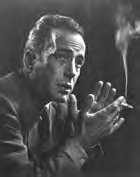 Yes, smoking is dangerous to one’s health. So is mountain-climbing. Whether it’s a risk worth taking or not should be up to the individual to decide. I don’t smoke, but I can’t see that it’s any of my business whether others do.