[cross-posted at Liberty & Power]
I’ve argued, some would say ad nauseam, that the libertarian struggle against statist oppression needs to be integrated (or re-integrated) with traditionally left-wing struggles against various sorts of non-state oppression such as patriarchy, racism, bossism, etc.
My position finds support, albeit in a less than straightforward way, in Rothbard’s article “Contempt for the Usual” in the May 1971 issue of Libertarian Forum.
This might seem an odd article for me to cite on behalf of my leftist heresy, since the article is a sustained attack on cultural leftism generally and feminism in particular. But I maintain that Rothbard’s arguments, no doubt malgré lui, actually support my position.
Here are some crucial excerpts:
For apart from the tendency on the Left to employ coercion, the Left seems to be constitutionally incapable of leaving people alone in the most fundamental sense; it seems incapable of refraining from a continual pestering, haranguing and harassment of everyone in sight or earshot. … The Left is incapable of recognizing the legitimacy of the average person’s peaceful pursuit of his own goals and his own values in his quietly sensible life.
Many libertarians who are enamoured of the principles of Maoism point out that, in theory at least, the decentralized communes and eternal self-and-mutual-criticism sessions are supposed to be voluntary and not imposed by violence. Even granting this point, Maoism at its best, forswearing violence, would be well-nigh intolerable to most of us, and certainly to anyone wishing to pursue a truly individualist life. For Maoism depends on a continual badgering, harassing, and pestering of every person in one’s purview to bring him into the full scale of values, attitudes, and convictions held by the rest of his neighbors. … The point is that in the Maoist world, even at its most civilized, the propaganda barrage is everywhere.
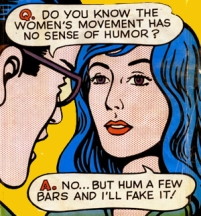
To put it another way: one crucial and permanent difference between libertarians and the Left is in their vision of a future society. Libertarians want the end of politics; they wish to abolish politics forever, so that each individual may live his life unmolested and as he sees fit. But the Left, in contrast, wants to politicize everything; for the Left, every individual action, no matter how trivial or picayune, becomes a “political” act, to be examined, criticized, denounced, and rehabilitated in accordance with the Left’s standards. … The Women’s Lib movement, of course, has been in the forefront of this elevating of hectoring and pestering into a universal moral obligation. …
One would hope that the free society of the future would be free, not only of aggressive violence, but also of self-righteous and arrogant nagging and harassment. “Mind your own business” implies that each person attend well to his own affairs, and allow every other man the same privilege. It is a morality of basic civility, of courtesy, of civilized life, of respect for the dignity of every individual. It does not encompass all of morality, but by God it is a necessary ingredient to a truly rational and civilized social ethic. …
The crucial point here is that those libertarians whose only philosophy is to oppose coercive violence are missing a great deal of the essence of the ideological struggles of our time. The trouble with the Left is not simply its propensity for coercion; it is also, and in some sense more fundamentally, its hatred of excellence and individuality, its hostility to the division of labor, its itch for total uniformity, and its dedication to the Universal and Permanent Pester. And as it looks around the world, it finds that the main object of its hatred is the Middle American, the man who quietly holds all of the values which it cannot tolerate. … [O]ne of the great and unfilled tasks of the rationalist intellectual, the true intellectual if you will, is to come to the aid of the bourgeoisie, to rescue the Middle American from his triumphant tormentors. … In the name of truth and reason, we must rise up as the shield and the hammer of the average American.
So how does all this support my position? Well, notice that Rothbard here treats the principle of minding one’s own business as broader than the non-aggression principle; he criticises “those libertarians whose only philosophy is to oppose coercive violence” for not recognising that minding one’s own business implies a rejection “not only of aggressive violence, but also of self-righteous and arrogant nagging and harassment,” even when such nagging and harassment involve no use of force against person or property.
 In short, then, Rothbard in effect agrees that a pervasive attitude of such “intolerable” Maoist-style criticism, even if peaceful, would be a form of oppression, and one that libertarians should be concerned to combat just as much as they combat actual aggression. And this is exactly the sort of thing I’ve been saying too. Restrictive cultural attitudes and practices can be oppressive even if nonviolent, and should be combated (albeit, of course, nonviolently) by libertarians for some of the same sorts of reasons that violent oppression should be combated.
Of course, Rothbard’s point might seem to support mine only generically, not specifically – since he identifies feminism, rather than patriarchy, as an instance of the form of oppression he’s concerned to combat. As Rothbard sees it, “the Middle American, the man who quietly holds all of the values which [the Left] cannot tolerate,” is inoffensively minding his own business, while feminists and other leftists who attack his values are refusing to mind their own business, and are instead subjecting the ordinary mainstream American to “a continual badgering, harassing, and pestering … to bring him into the full scale of values, attitudes, and convictions held by the rest of his neighbors.”
I think this is the wrong way to understand the nature of the complaints that feminists and other leftists are bringing. That’s not to say, of course, that we feminists et al. are never guilty of the sort of thing Rothbard is referring to; any ideology can be, and every ideology surely has been, defended in obnoxious, officious, and intrusive ways, and feminism is no exception. But the question is whether that’s the whole story, or even the main story, with the feminist criticisms that Rothbard is talking about, and I claim it isn’t. The way to understand the criticisms that we feminists bring is to see that from our point of view it is patriarchy that refuses to leave people alone – that the process by which patriarchal attitudes are promoted, inculcated, and reinforced amounts precisely to “a continual badgering, harassing, and pestering of every person [especially women] in one’s purview to bring [her] into the full scale of [patriarchal] values, attitudes, and convictions held by the rest of [her] neighbors.”
The point of feminist criticism is thus not to politicise the reproduction of male supremacy but rather to identify the political character it already possesses, and the aim of a feminist political movement (understanding “political” here to denote any organised movement for social change, whether peaceful or violent) is to defend women against such oppression, to serve as their “shield and hammer.” And ditto, mutatis mutandis, for the defence of workers, gays, ethnic minorities, etc., against various forms of oppression which, while indeed often supported by violent means (statist or otherwise), are by no means confined to such means. To whatever extent Rothbard’s “Middle Americans” are complicit in such oppression, they are to that extent not minding their own business – and leftist attempts to correct their attitudes are then strictly defensive, in service rather than violation of “a morality of basic civility, of courtesy, of civilized life, of respect for the dignity of every individual.”
Albert: The difference, I think, is that rights don’t incorporate the subjetive ends of someone in particular but permit the peacefully realization of all of them.
But clearly it does not permit the peaceful realization of any and every end. Some ends include aggression as a consitutive part — e.g. the ends adopted by fascists (who view war as part of a healthy national life) or by the “positive good” faction of slavery apologists in the Southern United States (who viewed the enslavement of “inferior” races by “superior” races as a good in itself). These ends cannot consistently be combined with the nonaggression principle because the end itself is aggressive.
So to be accurate, you’d have to say something more like this: “Rights don’t incorporate the non-aggressive subjective ends of someone in particular, but permit the peaceful realization of all of those that are non-aggressive.” But since “non-aggressive” is just a synonym here for “non-rights-violating,” that is equivalent to saying “Rights … permit the peaceful realization of all the ends that don’t violate rights.” That’s certainly true (analytically true, even), but I don’t see how it proves anything at all about the status of respecting rights vis-a-vis other moral commitments. You could just as easily say that “egoism permits the selfish realization of all the ends that don’t conflict with my own self-interest,” or “Feminism permits the antisexist realization of all the ends that don’t oppress women.” Any given moral commitment is going to rule on the issues that it takes an interest in, and leave the rest of the field open for other commitments to decide.
Albert: I think it’s the other way around. By caring too much for the non-agressive values of people qua libertarian you are endangering your own libertarian positions. People with these non-agressive values (but nonetheless oppressive) will feel threatened not by your particular values / personal views but by your very own political philosophy. They will think that a libertarian order will be a menace to their non-agressive conducts, and actually it’s not. You are saying to them “libertarians, qua libertarians, will fight against your personal non-agressive values, but you are welcomed in a libertarian order”. It doesn’t make much sense to me.
But I don’t want slimy male supremacist types (or racist creeps, or blowhard know-it-all bosses, or whatever) to feel welcomed in a libertarian order. I think they are at best obnoxious deadweight and at worst an active menace to the prospects for liberty. And I think that they should feel threatened by consistent libertarianism: there is good reason to think that a free society would dramatically undermine their ability to go on oppressing and exploiting their victims.
I’m an anarchist, so I do not advocate using force against anyone — even real creeps — who conscientiously abstains from initiating force against others. But there’s no reason why I should have to co-operate with, or evangelize to, or cater to the sensitivies of, or moderate my tone towards, people whose values I find not only morally repugnant, but also specifically a menace to the real-world application or implementation of libertarian principles. I don’t want to be part of a movement that they are part of and I don’t want to live in a community where they feel welcome. (Besides which I think that any movement in which they are happily accepted is unlikely to make any concrete, long-term progress towards freedom.)
Maybe I’m misunderstanding you here, but you seem to be suggesting that it is pragmatically important for libertarians to portray libertarianism as a very big tent, and that failing to welcome anyone who meets the minimal criteria for counting as a libertarian is in some sense a strategic mistake. But I don’t see how this is true. Numbers don’t always determine political victories; political strategy is not just a matter of getting as many people to rally to your standard as you possibly can. If I’m misunderstanding your point, I hope you’ll correct me. If I’m understanding you rightly, it might help if you could explain more specifically you think that alienating (say) nonviolent white supremacists or peaceful patriarchs is harmful to libertarian prospects.
Albert: I think it’s better to fight against these oppresive values simply as moral agents and decent human beigns, not as libertarians. Furthermore, if you as a libertarian promote not only the NAP but also other kind of values, other libertarians with different values will be tempted to promote, qua libertarians, his own values, and the distintion between rights and value will be blurred.
But “I will not tolerate white supremacy, even where nonviolently imposed, and I will actively organize and agitate against it” is a very different claim from “I am going to start shooting people involved in imposing white supremacy, even if they do so nonviolently” are two obviously different claims, which can be clearly distinguished. And if I make the distinction clearly (which, as a libertarian, I take pains to do), then I don’t see how it would my fault if other people then blurred the distinction that I made. Of course any position can be confused or misrepresented, either by people who think that they agree with it or by people who think that they suppose it. But as long as the position can be and has been made clear by the people advocating it, the responsibility for misunderstanding it lies on those who have misunderstood.
Tim: So being unsatisfied with the roundabout nature of the free market argument for competitive antidiscrimination, my aggrieved friends will probably start agitating for direct action, ie for state intervention or personal or group intimidation (if arguably only counter-intimidation), which brings us back full circle to Rothbards argument too.
Just so we’re clear, “direct action” tactics may be either coercive or noncoercive, but they never involve state intervention. Direct action is defined partly by contrast with efforts to make political changes through electioneering or lobbying government officials. The idea here is that the people who want to make the change take actions that directly contribute to bringing it about, instead of trying to influence and enlist the government or other third parties to do it for them.
N.B.: The people who talk a lot about “direct action” today very often endorse coercive forms of direct action (e.g. doing damage to corporations they don’t like by trashing their storefronts). But that’s not because direct action is inherently coercive; it’s because adopting direct action requires you to get out from under certain myths that the mystique of the State promotes (having to do with Law and Order, the necessity of Working Within the System, etc.), and most people who have managed to divorce themselves from those myths aren’t principled libertarians, and have fallen into the opposite error of romanticizing rebellion as such. There are lots of forms of direct action — involving social ostracism, boycotts, pickets, strikes, building counter-institutions, etc. — that have nothing to do with destroying property or assaulting people, and I for one think that libertarians would benefit from spending less time on vain efforts to lobby and evangelize to the established power elite, and more time examining the history of direct action tactics and promoting their future use as a means to liberty.
Albert Esplugas: You are, may I say it, begging the same question that you are posing to me: how do you prove that my subjective moral aversion to take drugs or to prostitute myself are objectively wrong?
The way we prove anything to be right or wrong is through moral philosophy. One of the central methods of moral philosophy is reflective equilibration, about which see my discussion here.
Besides, if all moral values are objective, why tolerate wrong values if you discover they are wrong? I think you are somewhat endangering your own libertarian position, since you are saying that all people’s subjetive ends (or moral values in particular, but I think that all conducts have a moral component) can be categorized wrong or right objectively. Others will say: “well, if I determine objectively that taking drugs is wrong, I don’t see why I have to respect the use of drugs”.
This is a common argument, that there’s some connection between moral skepticism/relativism/subjectivism on the one hand and toleration on the other. For example, Milton Friedman has said it’s a good thing we don’t know what sin is, because if we did we’d have to ban it.
But I think that reasoning is completely wrong. Suppose I say (as I do) that, say, racism and aggression are both objectively wrong. Now if someone says “so if racism is objectively wrong, why can’t we make it illegal?” the answer is that aggression is also objectively wrong. So objective values don’t threaten freedom if freedom is itself one of those objective values.
By contrast, suppose moral values were subjective, so that being for or against racism were merely a subjective preference. Would that tend to make people less likely to ban racism? I don’t see why — not if they think a preference for or against freedom is subjective too. It’s worth remembering that the Nazis were moral relativists; they explicitly claimed that there were different values for different groups, and that was right according to Jewish values was wrong according to Aryan values and so on, without there being any universally valid morality. That didn’t make them tolerant and freedom-loving, though; instead the Nazis said, “peace may be your bag, dude, but conquest is our bag, so hey, we’re going to conquer you.” (not an exact quote)
People with these non-agressive values (but nonetheless oppressive) will feel threatened not by your particular values / personal views but by your very own political philosophy. They will think that a libertarian order will be a menace to their non-agressive conducts, and actually it’s not.
This objection seems to cut at least as much for me as against me, though. For there are plenty of people who have an aversion to libertarianism because they think it’s indifferent to nonviolent oppression. So if we follow your advice to avoid alienating the pro-oppression folks, the result will be that we alienate the anti-oppression folks. Now if I have to choose between alienating the pro-oppression folks and alienating the anti-oppression folks, well, being anti-oppression myself it’s obvious which way I’m going to choose.
Imagine that in this libertarian society all individuals are passionate rothbardians. But some ot them are racists (discriminate in their property against people of other races because of that). And others have patriarchal values. But all of them are libertarians and we live in a libertarian order. Would you say still that qua libertarians we have to fight against the values of that group of “oppressive” libertarians? Why, if libertarianism has been achieved and, since its inhabitants are rothbardians, there is no risk that it will disappear any time soon?
Because of the three kinds of thickness. Strategic thickness: I claim that a racist society is unlikely to stay libertarian, since it lacks the kind of respect for personhood that a libertarian society depends upon. (Thus as Anonymous2 predicts, I’m skeptical of your “no risk that it will disappear” claim.) Application thickness: I claim that a society that’s confused about respectful treatment in that way is likely to make more mistakes in the application of libertarianism even if they don’t abandon the principle. Grounds thickness: even if they don’t abandon the principle and don’t misapply it, I think their position is unreasonable because there’s a conflict between their racism and the best reasons for being a libertarian, so that even if their racism doesn’t actually undermine their libertarianism, it logically ought to.
In a libertarian order, why we have to appeal to libertarianism to combat some non-agressive values instead of human decency and virtue?
Well, of course human decency and virtue are what we’re ultimately appealing to, since libertarianism and antiracism are both specific applications of decency/virtue. But my claim is that these applications are connected to each other. (No surprise, since as an Aristotelean I accept the unity of virtue.)
But anyway I think that the racist owner of the business or the patriarchal man are minding their own business, and your post suggests that (because of their racism / patriarchal values) they are not.
Right, they’re willingly contributing to an oppressive situation, they’re supplying bars to the birdcage — so they’re not minding their own business.
Anonymous2: No, no, that’s the whole point of the example, namely that it shows libertarian rights imply the “right” to starve someone to death. …Dr. Long always waves his hand about these “easement” issues, so I want a frank and clear answer: Does libertarianism imply the “right” to wall someone in so they need helicopter lifts to keep from starving, or take away most of the oxygen surrounding someone sitting in the park, wall in somebody’s floating space-station with super-funky subspace mines, etc.
I don’t see that I’ve “waved my hand” about these issues. I think the position I’ve taken is clear and consistent: No, libertarianism does not imply the right to “wall someone in so they need helicopter lifts to keep from starving, or take away most of the oxygen surrounding someone sitting in the park, wall in somebody’s floating space-station with super-funky subspace mines,” or any other such scenario. And I’ve given my reason as well: my defense of my rights must not inflict harm on others disproportionate to the seriousness of the rights’ infringement. (Incidentally, I think this is a good example of application thickness: having the right attitude toward the value of other people makes one more likely to apply the NAP in such a way as to treat walling someone in as a violation of NAP rather than as an exercise of rights.) Anonymous2 has said previously that s/he prefers a different way of addressing these issues besides proportionality. Fine, but proportionality is my way of addressing them, and it yields the result that Anonymous2 wants, so what’s the problem?
quasibill: Attacking: “North’s (again, just making a useful strawman here) patriarchial, Biblical culture is evil, oppressive, and must be changed for there to be justice in this world.”
I wouldn’t say “justice,” since I think of justice as having to do with rights. If a situation doesn’t involve a rights-violation, it’s not unjust — though it may be cruel, monstrous, etc.
As for being against attacking — what about attacking statism? I mean statist ideology, not statist practice. It’s not a violation of the NAP to advocate state action. So if we shouldn’t attack any non-rights-violating values, should we not attack statist ideology?
One thing I want to resist is this idea many people, libertarian and not, seem to have that any rights-violation is worse than any non-rights-violating. It’s as though people think that the reason for saying that we can use force against A but not against B is that A is worse than B. But it needn’t be. Systematically undermining someone’s self-confidence is worse than stealing a grape. But there are plenty of reasons — both consequentialist and deontological — why the second should be illegal and the first shouldn’t.
Fine, but proportionality is my way of addressing them, and it yields the result that Anonymous2 wants, so what’s the problem?
The basic problem, which perhaps I should have stated before, is that these sorts of problems don’t have solutions logically deducible from the NAP; rather, like continuum problems, they only really have “common law” solutions. However, you seem to think that their solution is indeed logically deducible, which I found rather odd, and possibly dangerous since it can lead to confusion about the scope of the NAP.
(Example: A poster (Jenny I believe) in the above comment thread who deduces from these examples that there is a “right to use your house”, seeming to include bashing your way through someone else’s property to get to it.)
To see this point, consider a future where helicopter technology is cheap and efficient. In such a future I can’t see landlocking as being considered a rights violation at all. (Note: Not merely a small or tiny violation, but a non-violation.) But now, merely because helicopters are expensive, the NAP seems to somehow imply landlocking violates rights.
However, you maintain that “my defense of my rights must not inflict harm on others disproportionate to the seriousness of the rights’ infringement”
For this to work, the landlocker’s efforts to defend his concrete barrier/hotel chain/whatever must exceed in severity my violation of his barrier/hotel/whatever. Yet if he were to enter my home by tearing down one of my walls I could order him off at gunpoint, and you wouldn’t consider this to be a “disproportionate” response, correct? If my response defending my house is acceptable, then logically his response defending his hotel/barrier should be acceptable too.
The underlying lesson I think should be drawn is that not everything in libertarianism can be logically deduced from the NAP, or even the modified NAP I defended earlier. I’m not saying I agree with utilitarians like Friedman on these issues, but nevertheless quasibill is correct in that there are some important aspects to a general law code which, if they are decided the “right” way, will not merely take the NAP into account, but local traditions and common sense as well.
Then I’m not sure what we’re disagreeing about, beyond perhaps terminology and details of application. My position is, and for the last decade or so has been, that the content of NAP, i.e. the content of what counts as “aggression,” is partly specified by “local traditions and common sense.”
Anyonmous2: For this to work, the landlocker’s efforts to defend his concrete barrier/hotel chain/whatever must exceed in severity my violation of his barrier/hotel/whatever. Yet if he were to enter my home by tearing down one of my walls I could order him off at gunpoint, and you wouldn’t consider this to be a “disproportionate” response, correct? If my response defending my house is acceptable, then logically his response defending his hotel/barrier should be acceptable too.
I’m not sure that proportionality is actually the best general solution to right-of-way / landlocking problems (since it seems to me that that leaves the enforcement of right-of-way as an injustice against the landlocker–just an injustice that she cannot justifiably retaliate against). But I don’t think your argument here actually cuts any ice against Roderick’s position. The way that Roderick spells out the principle of proportionality has to do with the “moral seriousness” of the force being used, which is not merely a function of the intensity or “severity” of the physical force being employed on each side. (That’s a very important factor, but it’s only one factor among many.)
So there may be cases where Jones’s use of force is disproportionate but Smith’s use of force, even though the same degree and kind of physical force is being employed on both sides of the conflict. This can happen whenever there is some contextual factor that makes Jones’s use of force more “morally serious” than Smith’s.
Like the difference between (1) shooting someone who is only trying to gain right of way off her landlocked property in order to buy groceries, as vs. (2) shooting someone who is holding your property in a state of siege and has now started tearing down your walls for no apparent purpose other than invading your home. Just to take an example.
The way that Roderick spells out the principle of proportionality has to do with the “moral seriousness” of the force being used
I’m not really sure I see the distinction between “severity” and “(moral) seriousness” – since we’re talking about a certain moral theory, namely libertarian justice, aren’t they the same thing?
Just to take an example…
I don’t think the purpose of the invasion is relevant to determining whether or not something is an invasion. However, if you want, we could change the scenario so that both the landlocker and the landlocked are blocking each other from a vital resource – maybe person A fenced in some prime grazing land to which person B (the landlocker) requires for his cattle. So then person A must violate person B’s property to use the grocery store, and person B must violate person A’s property to graze his cattle. I don’t think it matters either way – the point is that we cannot just wish away uncomfortable “hard cases” by claiming their solution follows logically from the NAP; either we must restate the NAP to avoid them (as Dr. Long claims he has done with “proportionality”) or else acknowledge that their resolution is essentially arbitrary, i.e. determined by whatever the common law dictates.
Rad Geek: But clearly it does not permit the peaceful realization of any and every end. (…)But since “non-aggressive” is just a synonym here for “non-rights-violating,” that is equivalent to saying “Rights … permit the peaceful realization of all the ends that don’t violate rights.” That’s certainly true (analytically true, even), but I don’t see how it proves anything at all about the status of respecting rights vis-a-vis other moral commitments.
I disagree with your characterization of that position. My definition is not tautological. I’m not defining rights using the concept of rights. I say: Libertarianism is the only system that permit every individual to pursue his ends peacefully / avoiding conflict. Peace / the avoiding of conflict is not the same as rights, but it implies (libertarian) rights by reasoning. In other words, given the nature of both human beigns and the world in wich they live, if individuals have to pursue their ends avoiding conflict they need rights, and not any kind of rights, they need rights consistent with the NAP. Also, I’m not deriving any ought from an is. I’m only saying that if someone wants to be civilized (and, a la Hoppe, by the very same act of arguing this issue at least he is acting in a civilized manner / trying to avoid conflict), if someone wants to live with others peacefully and pursue his ends undisturbed, he has to arrive at libertarian conclusions. If someone has agressive values and doesn’t want to be civilized / avoid conflict, I don’t see why I have to care at all about what he thinks. He doesn’t expect any reciprocity by his own act, he is renouncing to be treated in a civilized manner. If he attacks me, I will use force to repeal him. Period.
But I don’t want slimy male supremacist types (or racist creeps, or blowhard know-it-all bosses, or whatever) to feel welcomed in a libertarian order. I think they are at best obnoxious deadweight and at worst an active menace to the prospects for liberty.
But only the second is relevant if we are talking about libertarianism and not your personal values. If they are non-agressive / peaceful people, why not welcome them in a libertarian order? Because you consider them morally obnoxious? This is not a libertarian reason, and it’s the point I attempt to make all along in this discussion.
Besides, consider what I have said in the previous comment: “if you as a libertarian promote not only the NAP but also other kind of values, other libertarians with different values will be tempted to promote, qua libertarians, his own values, and the distintion between rights and value will be blurred.” Other libertarians could argue that immigrants, for example, pose a risk to a libertarian order (immigrants from a different culture, or immigrants that come from a statist region to an ancap place). And they could encorauge other people the expel them from their properties / communities. Or other libertarians could say that homosexuality undermines family, and families are a necessary fortress between individuals and the state, so qua libertarians we have to fight against homosexuality etc. I think all this focus on “oppressive values” (again, qua libertarians) can undermine the very own cause you favor, and confuse libertarians about the true objective of libertarianism: a non-agressive society. I think that, in a way, all fight against what you call oppressive values at the most should be instrumental to the achievement, application or justification of the NAP, and this has to be made clearly explicit every time. (I think this post fails in this respect, which is the reason I have stepped in). Qua libertarians we are not against these values per se, but (at the most) because they can undermine libertarianism / the NAP in one way or another.
By the way, I heartily agree with the thesis of this Block’s paper: http://blog.mises.org/archives/005264.asp
I’m an anarchist, so I do not advocate using force against anyone — even real creeps — who conscientiously abstains from initiating force against others. But there’s no reason why I should have to co-operate with, or evangelize to, or cater to the sensitivies of, or moderate my tone towards, people whose values I find not only morally repugnant, but also specifically a menace to the real-world application or implementation of libertarian principles. I don’t want to be part of a movement that they are part of and I don’t want to live in a community where they feel welcome. (Besides which I think that any movement in which they are happily accepted is unlikely to make any concrete, long-term progress towards freedom.)
It sounds reasonable to me.
If I’m understanding you rightly, it might help if you could explain more specifically you think that alienating (say) nonviolent white supremacists or peaceful patriarchs is harmful to libertarian prospects.
I have assumed that alienating peaceful people is harmful to libertarianism because it can reduce the number of its adherents or raise opposition to it (and that, I have assumed, is a bad thing). On the contrary, a big tent libertarianism won’t be seen as a menace by nonviolent individuals, and of course it doesn’t preclude that we fight, as moral agents, against their “oppressive” values.
But “I will not tolerate white supremacy, even where nonviolently imposed, and I will actively organize and agitate against it” is a very different claim from “I am going to start shooting people involved in imposing white supremacy, even if they do so nonviolently” are two obviously different claims, which can be clearly distinguished. And if I make the distinction clearly (which, as a libertarian, I take pains to do), then I don’t see how it would my fault if other people then blurred the distinction that I made.
Ok, I agree. But what concerns me is only that: are you defending both proposition qua libertarian? Or the first position can be defended simply as a moral agent / not qua libertarian? If you say that you defend the first proposition qua libertarian (at least without making explicit that this defense is instrumental to the NAP), I have troubles with that. This is my point.
Roderick Long:
Well, I think we don’t agree in the issue of morality / foundation of ethics, but I will study it more carefully.
This objection seems to cut at least as much for me as against me, though. For there are plenty of people who have an aversion to libertarianism because they think it’s indifferent to nonviolent oppression.
But they are mistaken because libertarianism does not mandate a specific set of values, but permit individuals to promote / campaing against values that they consider morally wrong. A lot of people think that libertarians are morally neutral or amoral persons, we are not of course. We oppose only agrressive actions qua libertarians, but like the rest of human beings we also have our preferences and values, and like those people that oppose “oppression” we (or nearly all of us) also oppose “oppression” in our every day life. The fact others don’t interpret all that in this way I think is a reason to explain it to them, not a reason to include the fight against “oppression” in the libertarian realm.
Because of the three kinds of thickness. Strategic thickness: I claim that a racist society is unlikely to stay libertarian, since it lacks the kind of respect for personhood that a libertarian society depends upon. (Thus as Anonymous2 predicts, I’m skeptical of your “no risk that it will disappear” claim.) Application thickness: I claim that a society that’s confused about respectful treatment in that way is likely to make more mistakes in the application of libertarianism even if they don’t abandon the principle. Grounds thickness: even if they don’t abandon the principle and don’t misapply it, I think their position is unreasonable because there’s a conflict between their racism and the best reasons for being a libertarian, so that even if their racism doesn’t actually undermine their libertarianism, it logically ought to.
ok, it makes sense. Let me add what I have said to Rad Geek: I think that, in a way, all fight against what you call oppressive values at the most should be instrumental to the achievement, application or justification of the NAP, and this has to be made clearly explicit every time. (I think this post fails in this respect, which is the reason I have stepped in). Qua libertarians we are not against these peaceful values per se, but (at the most) because they can undermine libertarianism / the NAP in one way or another.
Roderick,
I’m just too wary of culture, and the multitude of ways that cultures can non-aggressively conflict to the point of creating a call for aggressive responses. “Racism” is quite often more appropriately called “culturalism”, and the difference between the two is actually quite important. Further, I fear that some fundamental cultural pillars, while leading to some oppressive cultural applications, are also the pillars to liberty in those cultures – so weakening the consistent application of the pillar is a blow against broader liberty.
As an example of my first concern, I’ll point to a controversy local to me. A certain immigrant population has over the last 20 years become more and more numerous in my area. One overbroad generalization I can make about their culture is that they tend to like to put nice, big, cushy sofas on their front lawns. It’s a social phenomenon, and, I believe, in their culture, a very pro-liberty phenomenon. It creates a social space where everyone in the community has some idea about everyone else. This community awareness is great from issues such as charity, to ‘policing’, all the way to protecting children from abuse. Someone merely not being present on their lawn for a few nights causes concern among the community.
Now, some of the locals don’t like the result, for a multitude of reasons. Obviously, some of the couches get left out through any weather, and degrade somewhat quickly, and become eyesores. Also, there’s an argument that they attract vermin after time. Finally, there’s just simply little cultural understanding, and therefore some fear of, these people “hanging out” all the time – many people outside the culture (perhaps rightfully so) get the feeling best described by the Animal House scene in the bar.
Now, this second group might get together in a neighborhood and provide contractually that the properties are restricted from having the couches on the yard. The problem comes from enforcement costs, (even if the legal system has the equivalent of covenants running with the land). As a result, these people might conclude that their best bet in maintaining the lifestyle and culture that they prefer is to discriminate against those in the immigrant culture. Taking this option out of their bag, and making them social pariahs for using it, will merely subvert their still existing desire to be free of the couches into a call for aggressive regulation of everyone’s property. This is, in reality, much of the basis for support of zoning laws currently (and in fact, this fight was played out in the zoning boards).
As for the second concern, I point to the Amish. I personally think their “failure to forgive is the worst sin” credo leads to some perverse, oppressive results. However, it is their scrupulously consistent adherence to such principles that makes their society such a stable, free community in the middle of perhaps the most intrusive empire ever known. Knock out the applications that I disagree with, and perhaps the whole community loses its admirable qualities too, as you have now allowed exceptions to the fundamental principles (we can see what that has done to the Constitution).
I think as libertarians, and especially of the anarcho-variety, we must be very respectful of the power of culture, and the historical forces that created it, and of the fact that many people’s identity is closely tied to, if not in fact entirely based upon, their culture. I think as long as the NAP is respected, the strongest action that should be taken against oppressive cultural issues (as opposed to cultural outliers in a given community) is argument (i.e., no boycott, etc.), and even that must be done very carefully and respectfully.
I think as long as the NAP is respected, the strongest action that should be taken against oppressive cultural issues (as opposed to cultural outliers in a given community) is argument (i.e., no boycott, etc.), and even that must be done very carefully and respectfully.
That’s an interesting response, because in the sofa example it’s the immigrants putting the rotting sofas on their lawns that I would regard as the “oppressors”, and boycott (i.e. “discrimination”) would be a perfectly reasonable response to it. No society of free individuals is going to succeed if people are looked down upon for organizing boycotts of evil or disruptive individuals, especially the ones who do things that are really bad yet don’t violate rights (as happens in this case).
“That’s an interesting response, because in the sofa example it’s the immigrants putting the rotting sofas on their lawns that I would regard as the “oppressors”, and boycott (i.e. “discrimination”) would be a perfectly reasonable response to it.”
That’s exactly my point, although I’m going to say that the immigrants will equally see themselves as the victims in the scenario. So the key is to allow each culture to segregate itself – if, and to the extent that it so desires – and practice a form of racism. As time passed, some more repulsive manifestations of the cultural preference may manifest (i.e., refusing to serve any immigrant in the local store), but then you have the same point I made about the Amish.
“No society of free individuals is going to succeed if people are looked down upon for organizing boycotts of evil or disruptive individuals”
Well, to me, evil only gets applied to those who violate the NAP. And disruptive is almost always a matter of cultural mores, so it’s going to be a highly subjective value judgment, there. The sofas aren’t disruptive in the immigrant culture, but they are to the pre-existing culture in the area. Who’s disrupting who? The immigrants say the nosy, pushy locals are, while the locals say the immigrants are.
As I said, I feel the better option, rather than in your face boycotting, etc., is merely to move away and create your own cultural haven. And surely, the large cosmopolitan cities will remain largely multi-cultural, although you probably will have Little Italys and Little Chinas, etc. even there.
Oh, and let me say this about the sofas – I think as time goes by, the culture and economy will evolve to the point where having “nice” sofas (by some subjective criteria – lord knows I don’t agree with their taste in decorating their cars :), but that is a subjective call ) is a part of the culture. The people won’t want to be seen as having eyesore couches. This part of the phenomenon will pass, if allowed to run its natural course.
However, trying to force the change will only cause resistance, especially if the economics of teh community can’t currently support it. And that resistance then manifests itself in all sorts of cultural “defects” that lead to more conflicts.
Is it too reductionist to say that they wouldn’t feel comfortable because they have to assume the costs of their beliefs – psychological, social, economic? I am, of course, assuming and arguing that non-egalitarian approaches “cost” more: discrimination turns away otherwise good customers and business associates; bigotry requires one to maintain a level of psychological aggression that is draining; etc.
What I mean is that until we get rid of the coercive mechanism by which these costs are offset onto society instead of completely internalized, doesn’t it make more strategic sense to concentrate on the coercion? If we really believe in “thick libertarianism”, does it really require any defense at all, or is it the natural result of libetarianism, upon which we can safely count once we remove the State?
We must be careful to distinguish likely outcomes of our politics from the motivating core of our politics. I don’t see any harm in agitating for social justice and egalitarianism – I do it all the time – but I simply make clear that these are secondary implications of the primary goal: abolition of institutionalized coercion.
Course it could be that Rothbard was just wrong on this. Entertaining, but wrong.
“Perhaps landlocking someone would violate his rights because the perpetrator has imposed a death sentence on someone who has not himself violated rights.”
Since this doesn’t happen in the real world, I don’t see that it poses much of a challenge to libertarian theory!
True Blumfeld, but one doesn’t always debate something in philosophy because it’s likely to happen. 🙂
Upon reflection, I dicovered a good title for my rant would be “Was Monstressor a libertarian?”. I’m surprised nobody used a phrase like “Amontillado-libertarian” in the responses; it’s catchy, no?
Please distribute to all those who would be interested
Oppose Oppression with Ten Billion Pricks
Organised opposition to an oppressor requires leaders, who will
then be eliminated. But the oppressor can still be opposed by the
the oppressed if every one were to attack the oppressor with a
series of little pin pricks. Some possible examples are as follows:
1) Never show intelligence or initiative when working for the
oppressor
2) Only understand the simplest instructions
3) Commit many acts of minor or symbolic destruction
4) Be inefficient
5) Leak secrets slowly
6) act on behalf of the individual, not the oppressor
7) Act a bit strangely
8) Arrange objects in a patterns that are understood to be
agaist the oppressor
9) When walking in squares or street intersections,
walk in a counterclockwise direction to show opposition
10) Avoid streets with names associated with the oppressor
11) Do not join any judicial or security organisation unless to
oppose the oppressor
12) When appropriate, members of security forces shall make
their superiors less effective at oppression unless these
superiors have made their own superiors less effective
13) vote and attend meetings as late as possible
14) Work to rule
15) In the street, gather in bunches, walk in bunches, walk in
lock step
16) Everyone is to get into minor trouble
17) Disable surveillance equipment
18) Laugh at the oppressor
19) Invent, invent, think, adapt, reject, add
20) Do what other people do so that all do the same thing
to show opposition to the oppressor
21 Have Fun